Pomp and Circumstance at School of Wonder
As a program that offers adventure-based learning for 5-11 year olds, School of Wonder restructured our offerings last summer by separating the Wonder Kids into two groups: Wonderers (grades K-2) & Adventurers (grades 3-5).
Now arriving at the end of our first full-calendar year of split age group offerings (and our first graduation!), here are some reflections on how we made the decision and what we’ve learned along the way.
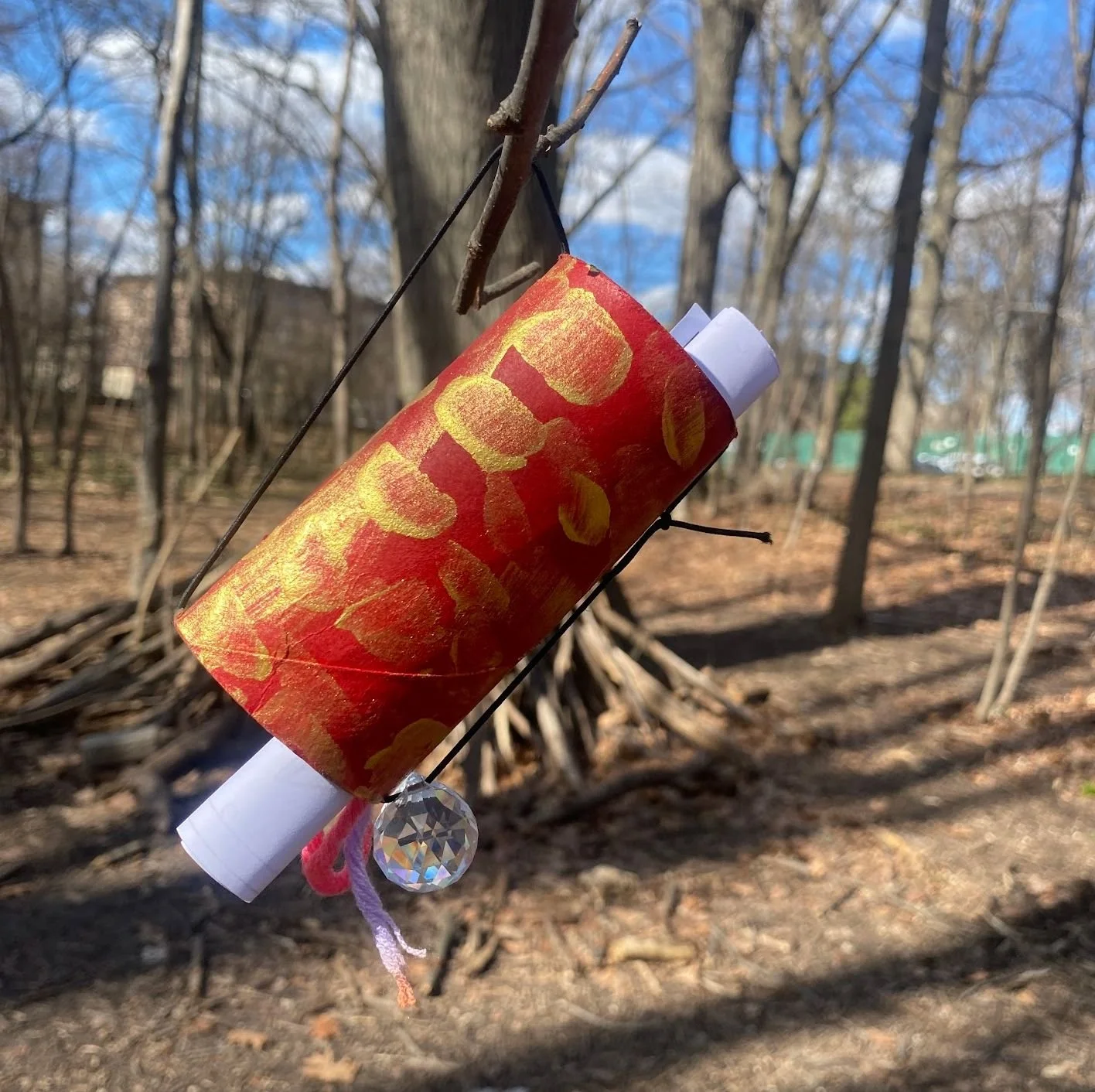
Since it’s inception, a School of Wonder adventure begins when the Wonder Kids receive a mysterious letter from Gaia, a fictional figure inspired by Mother Earth. Letters from Gaia invite the Wonder Kids to embark on missions to explore Prospect Park’s most magical corners during day camps, or to build, craft, and imagine new worlds in the Wonder Village during after school. Through the fantastical connection built with the imaginary Gaia and her messengers — the Wonder Leaders who secretly deliver the letters — the kids build their own unique connection to wonder for and about the natural world.
About three years into designing these adventures, our Wonder Leaders began to notice the connection to wonder and mystery shift for returning Wonder Kids who were growing older in the program. For some of them, the letters became less mysterious, Gaia less magical, and the adventures less imaginative. Gaia’s messengers were clearly the not-so mysterious adult Wonder Leaders instead of the elusive, fairy-like creatures previously imagined. Our curriculum design team faced a cross-roads of sorts:
How can we preserve the imaginative experience for younger-aged kids while also differentiating instruction for older Wonder Kids seeking a more independent and realistic framework for how to connect with nature, each other, and themselves?
We trialed this change in pedagogy last summer by splitting Wonder Kids into two groups to provide two uniquely crafted educational experiences. Through this new approach, we could continue using our already developed curriculum for the younger age group (Wonderers, grades K-2); and then for the older group (Adventurers, grades 3-5), we were challenged with the task of taking the shape of what we have already built and transforming it to better fit the Adventurer’s creative and educational perspectives.
This task led us to more clearly define what makes these age groups different and how to build a program that could listen more closely to the challenges and questions of older children. In considering what makes the Adventures different, we considered how to …
Focus on prompting opportunities for problem solving that encourages making collective decisions, valuing choice and autonomy in exploration, and building comfort with testing out options and making mistakes
Foster a philosophy that questions the world around us and asks us to think critically about it
Offer a sense of trust to Adventurers that allows them to choose their own routes, their own groups, and even their own moments to push up against boundaries or rules and question them in a thoughtful way
Develop friendships and explore the more complex interpersonal dynamics that show up in intentional connection
Connect science and the social world to magic and wonder
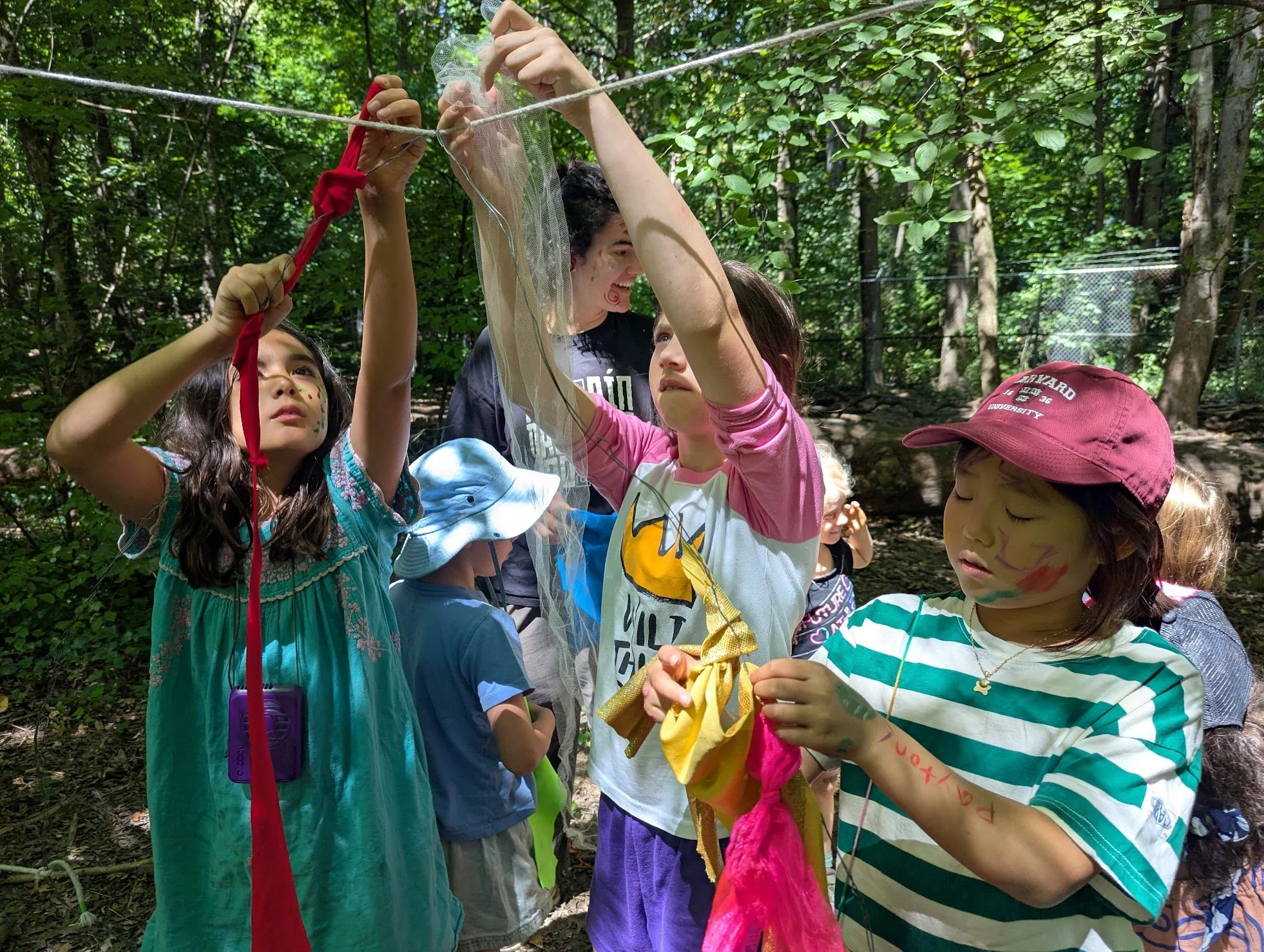
In considering how exactly we would make these changes, it felt important to bring real and accessible concepts to the Adventurers while maintaining fun and imaginary adventures rooted in the School of Wonder values. For example, instead of delivering letters from Gaia to introduce themes and launch an adventure, we created other ways to do this such as inviting immersive leaders to meet them (like the time actress and educator Madi Zins joined us) or presenting School of Wonder created artifacts that act as prompts for exploration (like the program “Newspaper of the Future”). We wanted to find ways to create half real + half imaginary experiences that would meet these older kids where they were already at and where they are going, using the following language to invite them into the role of becoming agents of stewarding our world rather than just exploring and learning about it:
“So, yes! We (the Wonder Leaders) are the ones planting Gaia’s messages. Of course we are Gaia’s messengers. We are stewards of the Earth. And you can be too.
Will you join us? Will you bring your wonder to the world?”
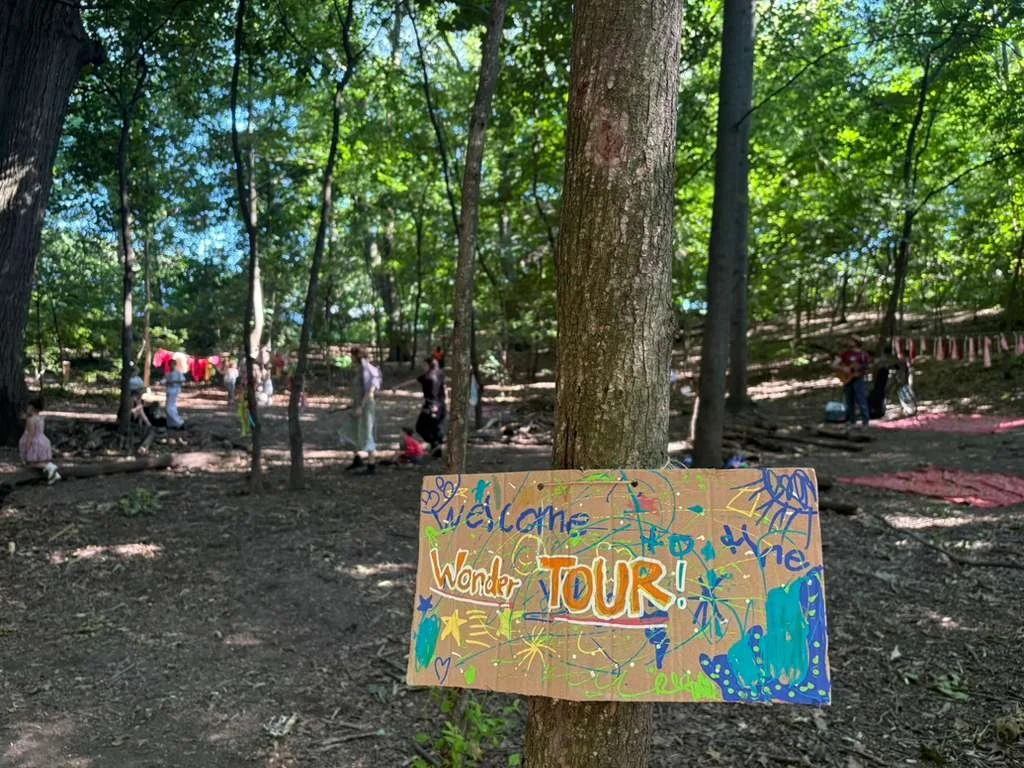
At the end of this past Spring After-School season, we celebrated the first full season of having multiple after-school offers (Wonderers, Adventurers, and Mixed Ages) by having our very first graduation — a ceremony to acknowledge the 2nd graders leaving the Wonderers age and becoming Adventurers. Wonder families across all programs were invited to join us in the Wonder Village on a blue-skyed June afternoon. Wonder Kids led tours of the Wonder Village for their families, music and dancing paraded throughout the trees, and Wonder Kids who attend different programs met for the first time.
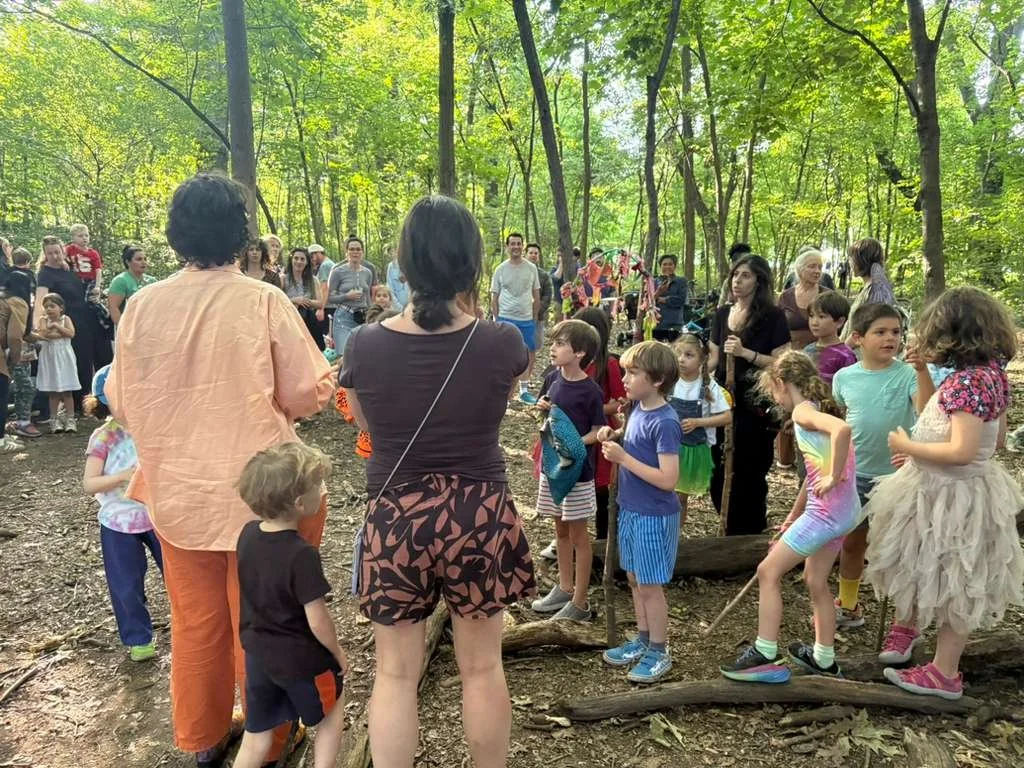
Near the end of the evening, Wonder Leaders gathered around a portal built between two trees, inviting the 2nd grade graduates to join in the center. One at a time, each graduating Wonderer took a magical staff and stomped it onto the Earth three times before passing through the portal and officially becoming Adventurers. This ritual signaled to the Earth that new Adventurers are here, and they are taking the next step towards putting into practice a transformed sense of wonder that acts as a commitment to not live outside the natrual world but rather a part of it. A commitment to stewarding this planet and the city in new ways.
Following the sound of several “stomp, stomp, stomps,” the portal to a new future opened for these Wonder Kids, as the younger, eager Wonderers stood watching a ritual that they will join in seasons to come.
Want to Learn more about what a day camp for Adventurers looks like?
For several seasons, we have run an adventure about how to make a better future. In our design, we explore how the Wonder Kids can imagine a future that is also hopeful rather than is just a story of despair, especially with relationship to climate change. We prompt them with questions like, “Are there different possibilities, and what could those be?” and invite them to tap into their creative and imaginary selves as important skills for nourishing and building hope.
This week-long camp — historically known as “Portal to the Future” — became a test case for splitting the camp into two different age groups (Wonderers and Adventurers) and designing a new curriculum for the Adventurers. The Wonderers would embark on the “Portal to the Future” and the Adventurers on the “Newspaper of the Future.” Check out our blog that showcases what they found!