
Newspaper of the Future
For several seasons, we have run an adventure about how to make a better future. This week-long camp — typically known as “Portal to the Future” — expanded to become “Newspaper of the Future” when adapting the adventure to our older age group, the Adventurers.
Check out what the Adventurers found in the pages of this magical newspaper from the future and what it inspired them to do!
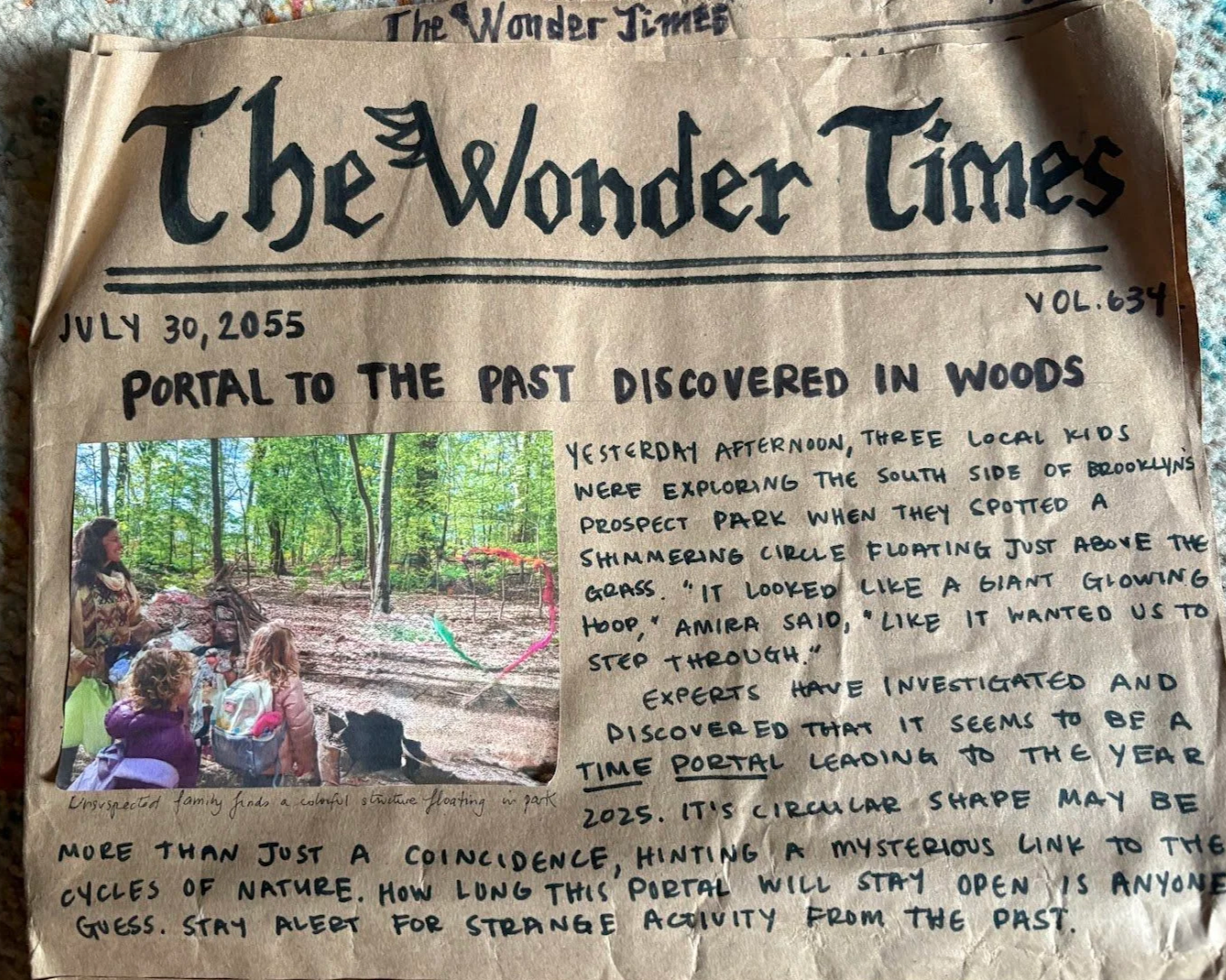
The front page of the Newspaper of the Future, the fictional newspaper found throughout the five-day camp.
In the design of this week-long camp, we invite the Wonder Kids to imagine a future that is also hopeful rather than is just a story of despair, especially with relationship to climate change. We prompt them with questions like, “Are there different possibilities, and what could those be?” and encourage them to tap into their creative and imaginary selves as important skills for nourishing and building hope. Like most School of Wonder-based methods, we find ways to link real knowledge with wonder — this time prompted by a magical newspaper from the future.
The adventures began each morning with the Wonder Kids finding a page of a newspaper written from the future, the year 2055. The fictional newspaper — designed by Wonder Leaders using real information and solutions from across the world today — was said to be the product of a 2055 world leader’s summit where animals and plants came together to get humans on board with the circular economy: a system where we reuse things and stop producing so much waste. It depicted sustainable events, interventions, and innovations that highlight the ways humans can take steps towards stewarding a better future.
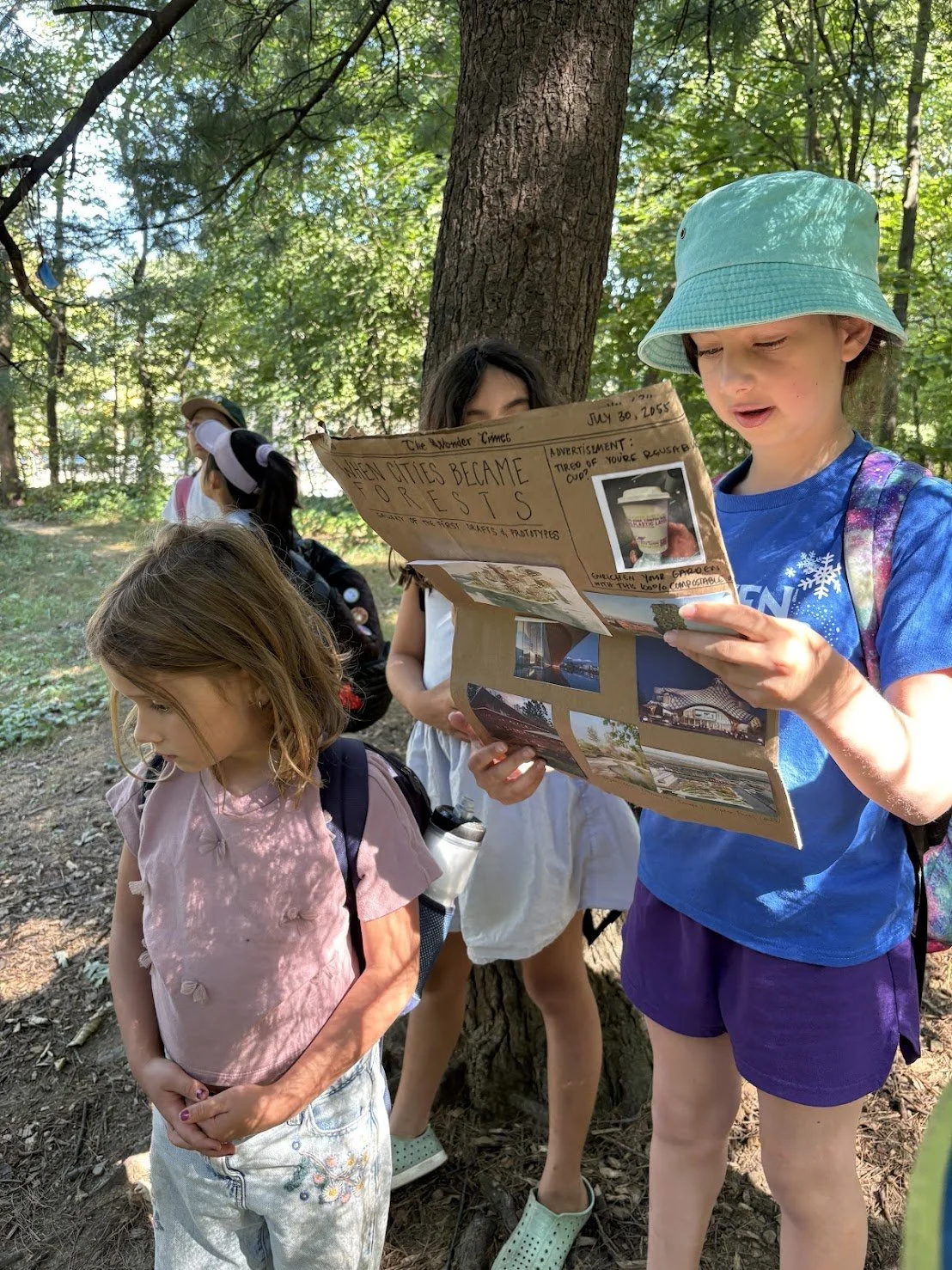
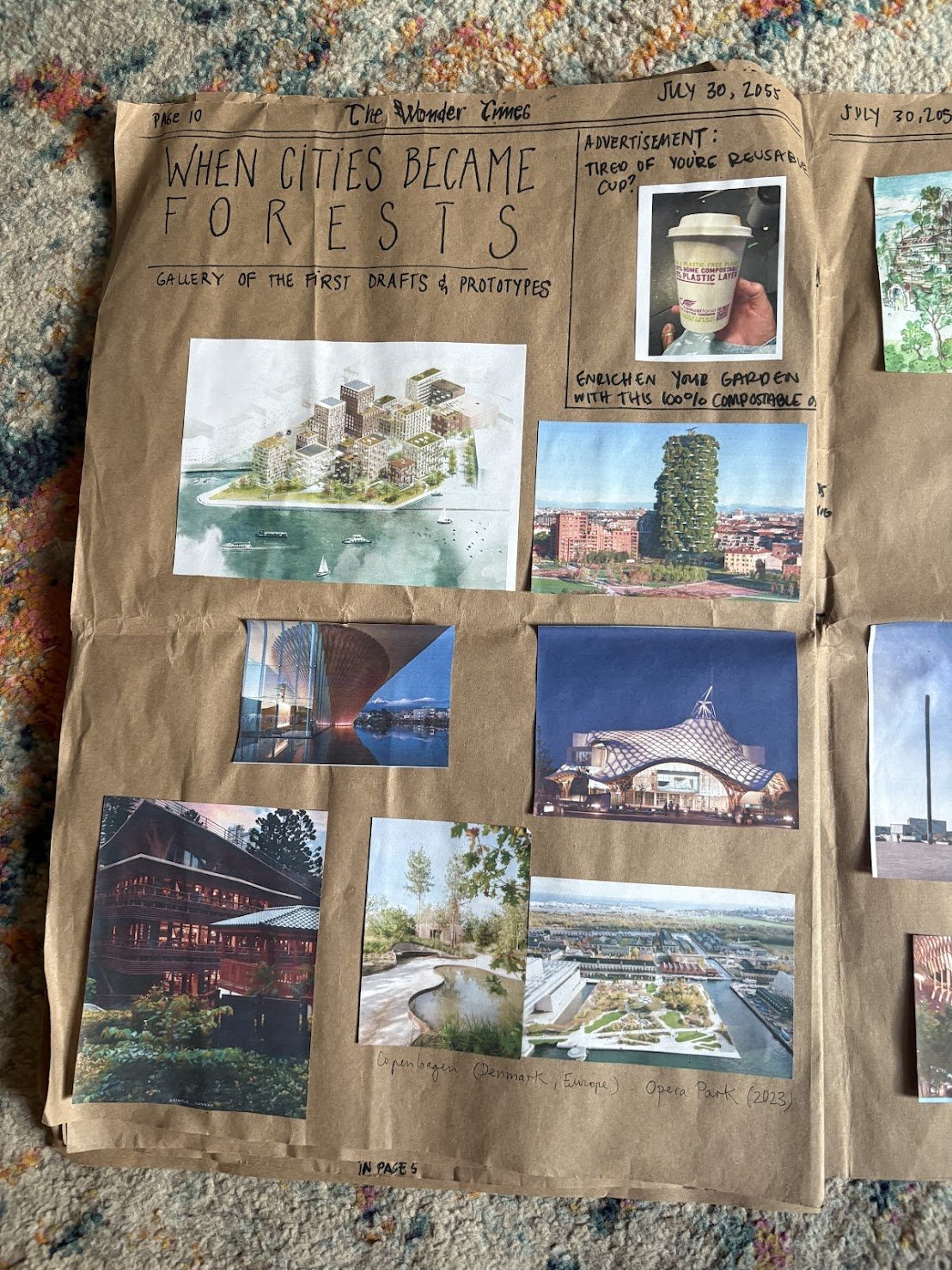
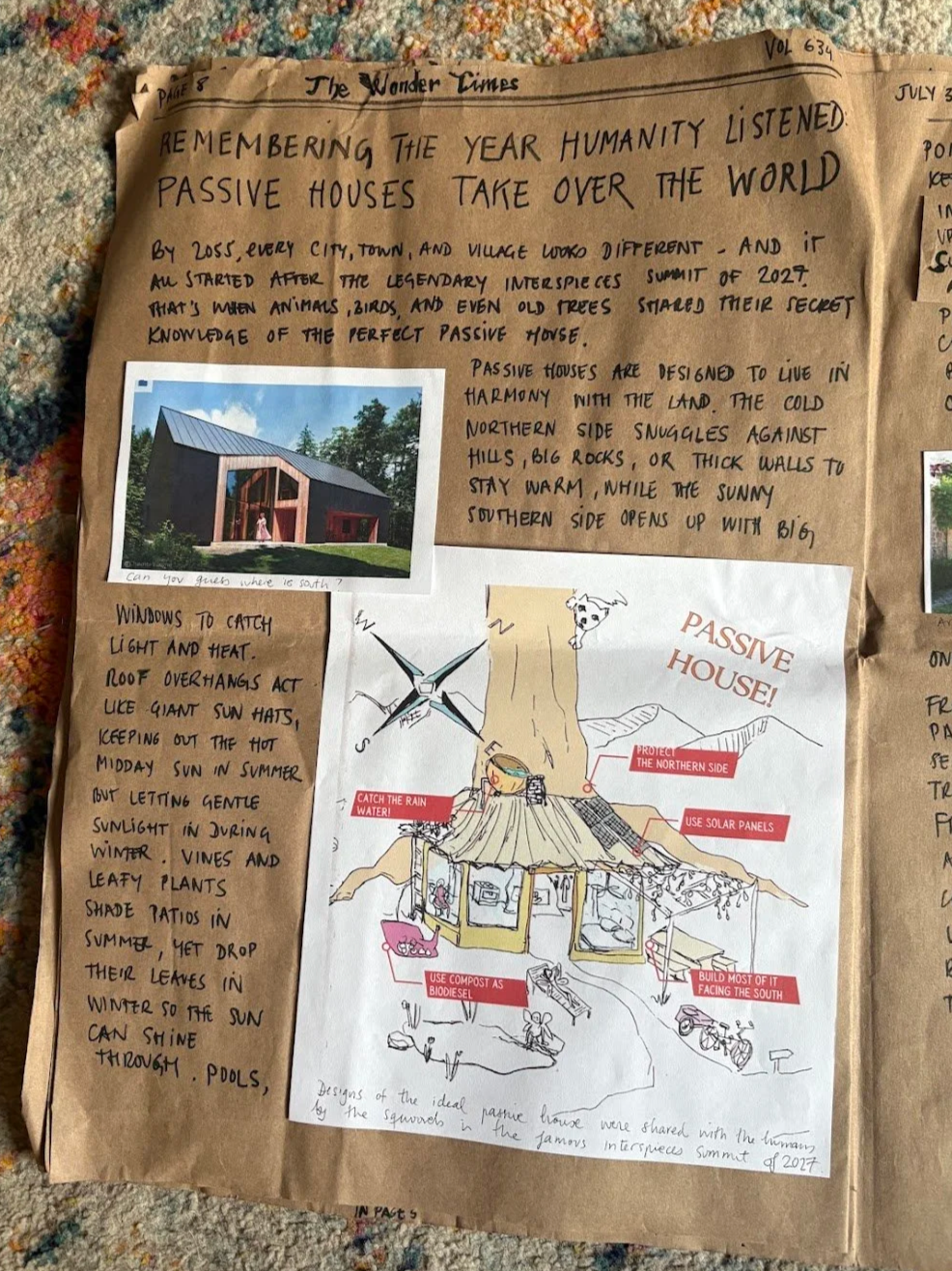
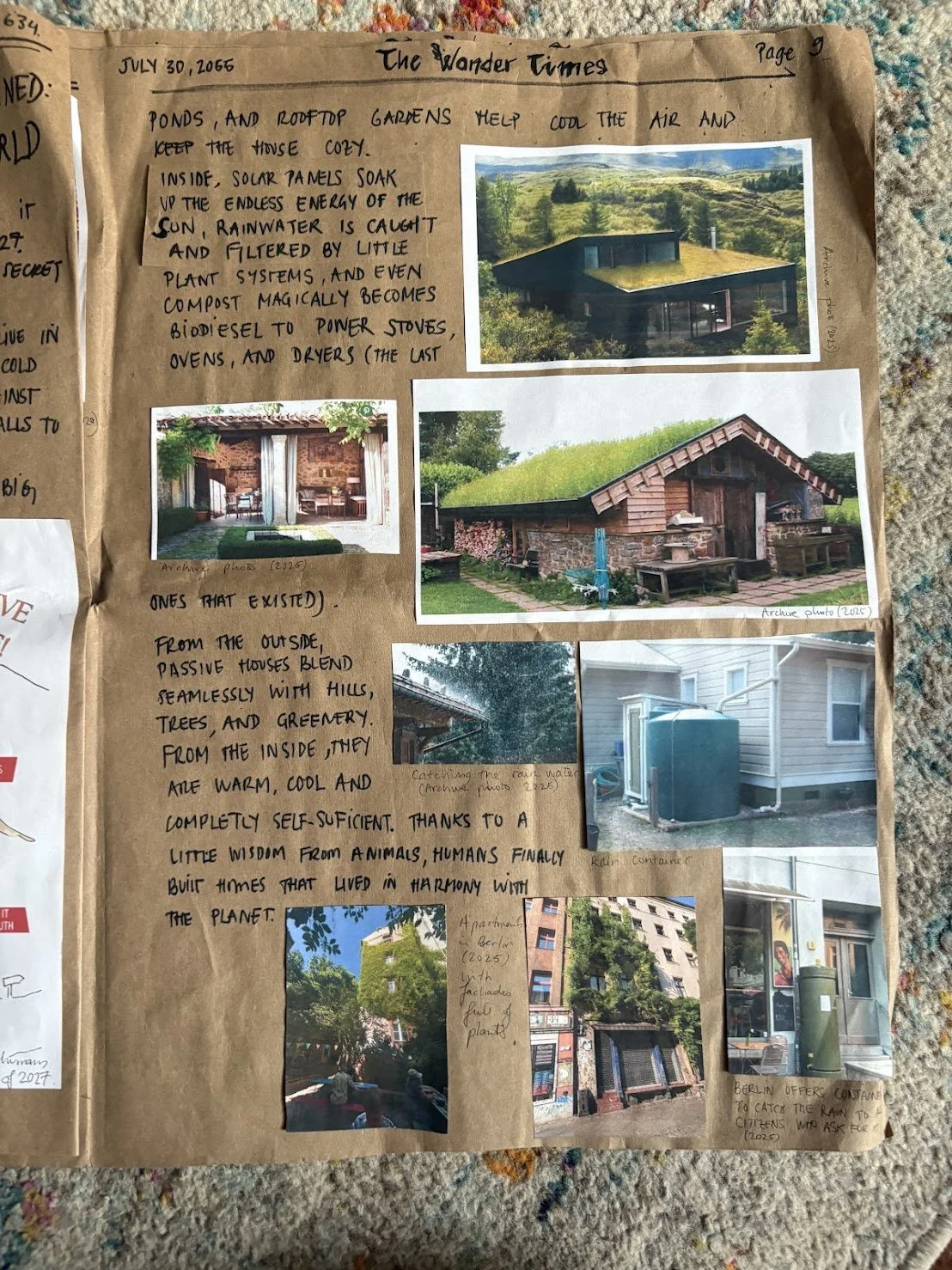
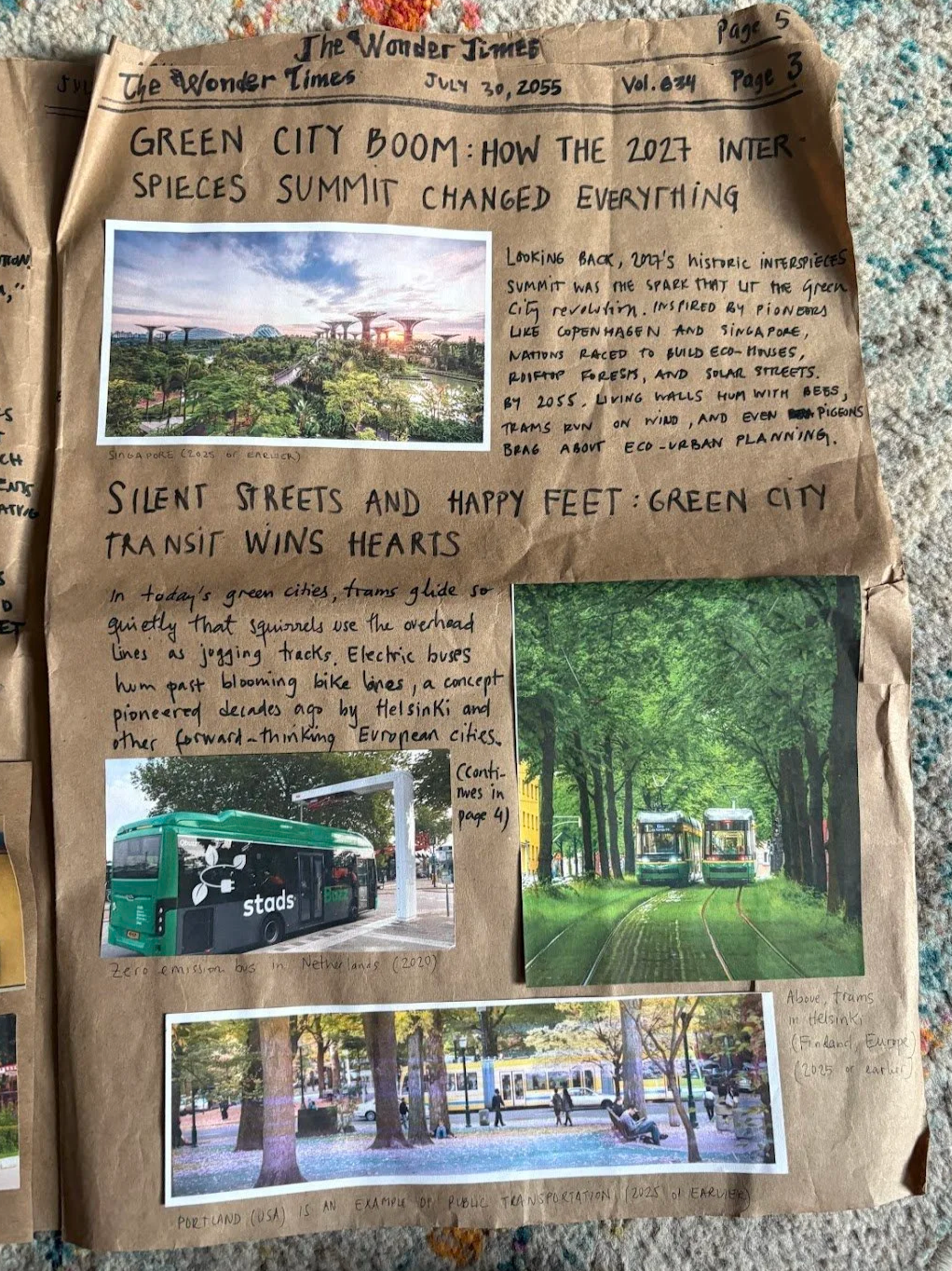
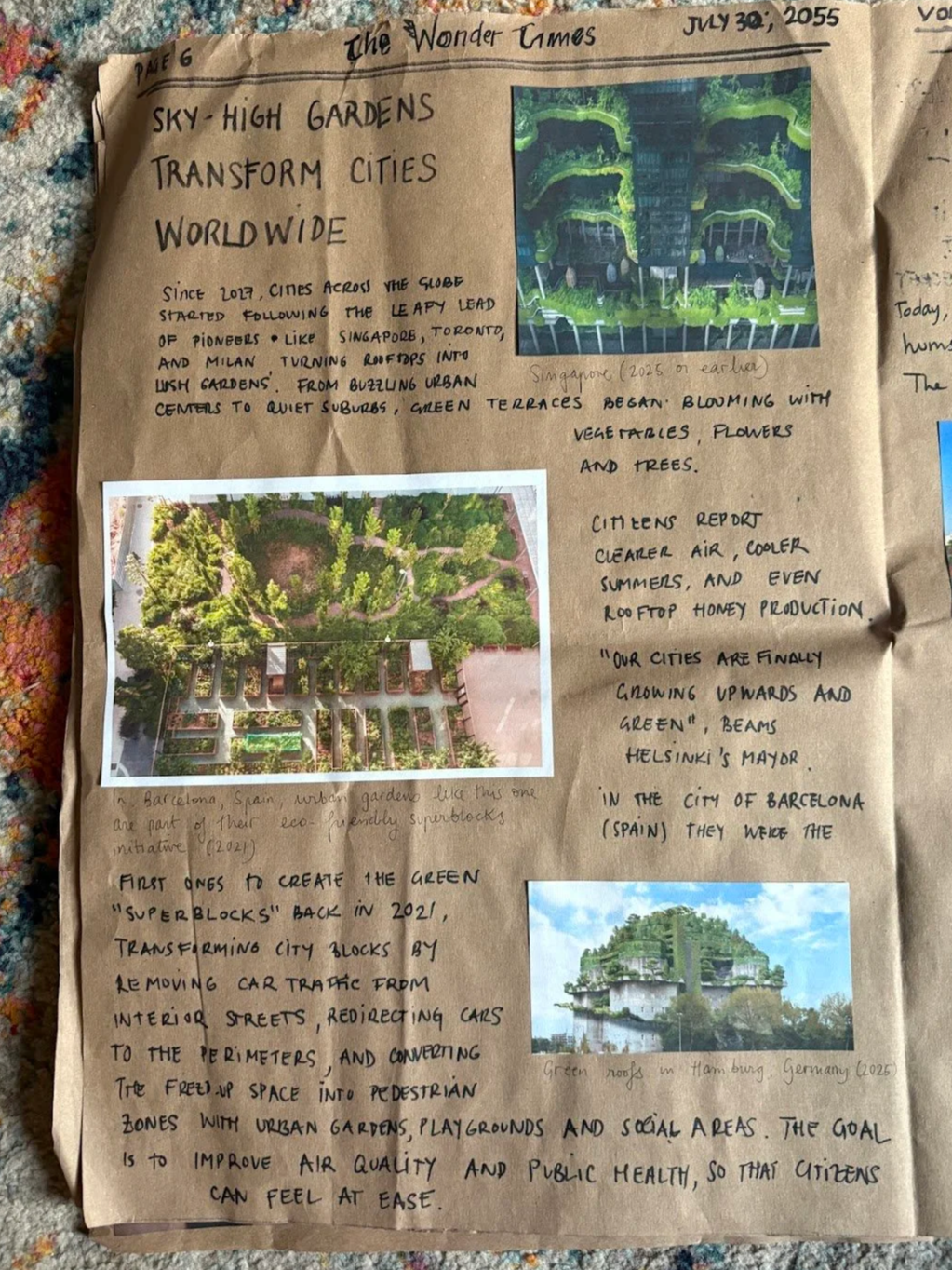
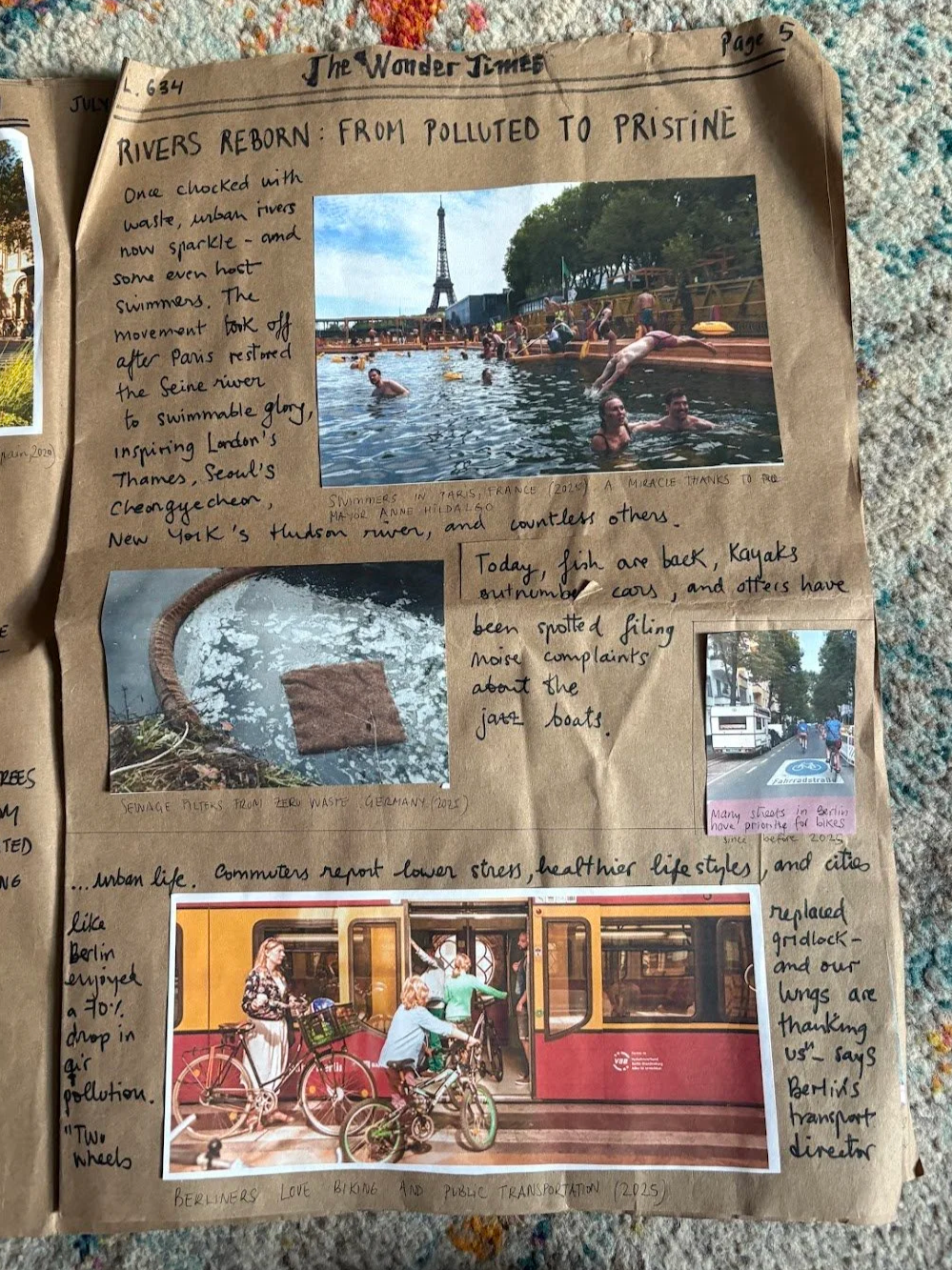
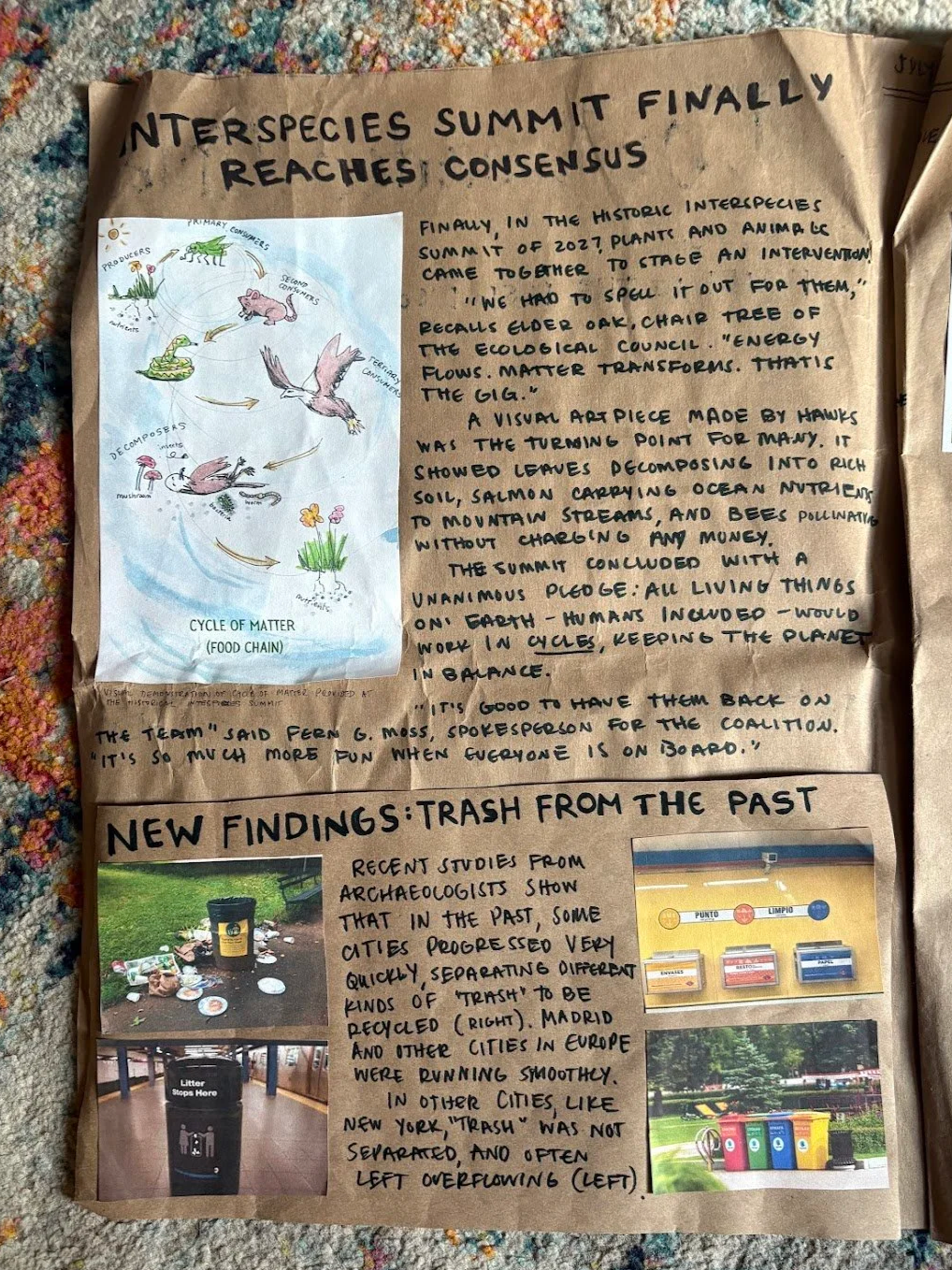
Each page introduced a concept the Adventurers could then use as inspiration to take action. For example, one page describes the impact of decades of building passive houses — homes built in harmony with Earth instead of the destruction of the Earth. Learning about passive houses inspired the Wonder Kids to spend the day building a community of passive homes in the Prospect Park forest, learning about construction techniques, energy conservation, and solar panelling through the imaginative production of stick homes for forest fairies and using leaf skeletons as blueprints for urban planning.
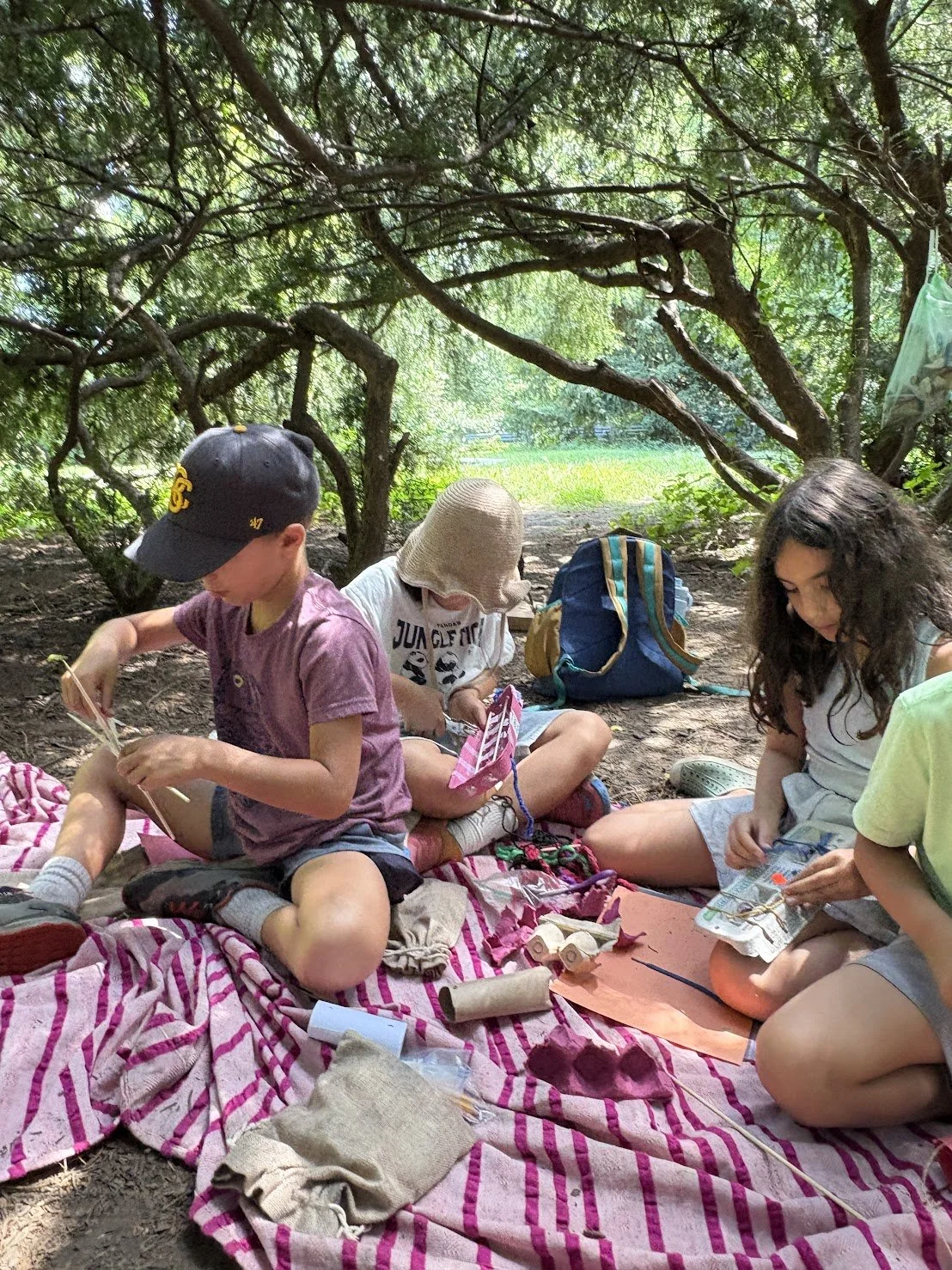
Another example included how to turn trash and scraps into repurposable objects. We created several Transformation Stations that brought together these materials and asked the Wonder Kids to find creative ways to restore them and become more conscious about consumption. The stations included…
Upcycling, where donated scrap fabrics were used to create costumes, belts, and power patches later stiched onto backpacks
Recycling, where plastic water bottles were transformed into materials for games like a mini putt-putt golf course
Repair, where Wonder Maps and close pins were restored to a useable function
Reuse, where dirty tarps, plastic bags, and take-out containers were cleaned and reused for new storage purposes and activities
Reimagine, where bent and broken items like hangers, toothbrushes, and tennis balls were used to create new objects with totally new functions
Through this particular curriculum, we teach environmental education by presenting physical solutions that already exist in our social world. By showing that there is real knowledge and solutions out there being put into practice, if we were just to change our focus, the future is already here. So in the pages of the newspaper, we have included pictures of real things:
Parisians swimming in the waters of a re-naturalized Seine river
Factories in Sweden transforming trash into energy
Cities building gardens that make urban life more sustainable
A notable day of the week for many of the Adventurers also became the day they met Youth Climate Advisor to the UN Secretary-General, Lena Goings. Lena is known for her activism with Fridays for Future NYC, where she fights for a just energy transition and an end to the era of fossil fuels. She joined a day of camp to tell us about how young people can be a part of changing the future today, in the present.
Maybe the future isn’t as far away as we may think, she challenged us to consider.
On the last day of the camp, in line with this same theme, we prompted the kids to not just read the newspaper pages but to contribute to them — to write the news of the future. Similar crafting new age groups for School of Wonder as a way to invite and empower older adventurers to apply the wonder they’ve cultivated in their younger years, we similarly hope that in contributing to the newspaper of the future, the Wonder Kids can see that they have agency in shaping the future, that they are literally writing the future.
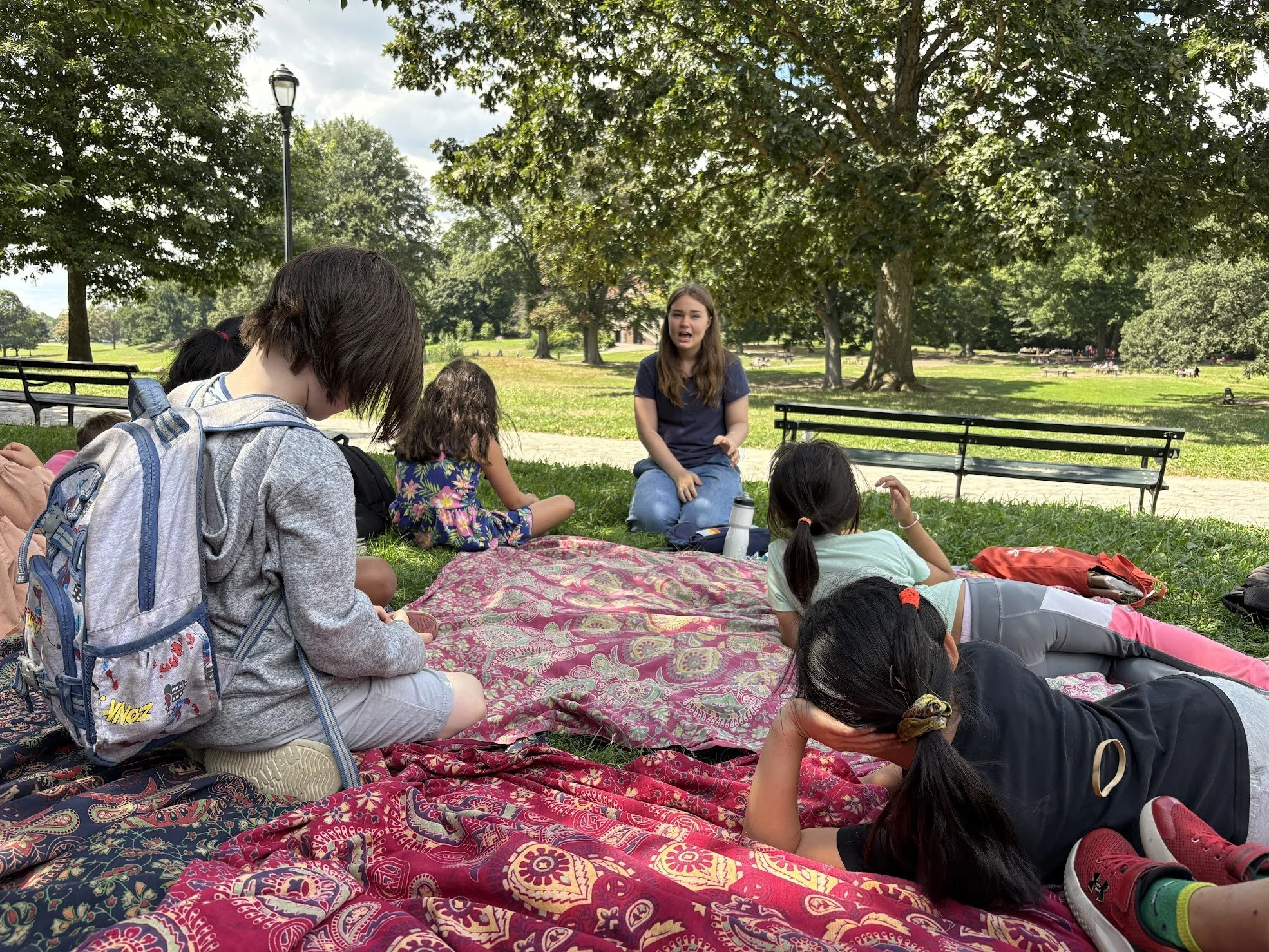
Lena Goings joining the Adventurers on a day of the week-long summer camp, “Newspaper of the Future”